

Travel Tuesday: 5 Ways to Book the Same American Airlines Flight
My husband and I are heading to New Jersey in September to visit his aunt and uncle, who live on the water. We’ll fly from Columbus into Philadelphia, grab a Turo, and head over from there.
When I started looking at flights, I found the American Airlines itinerary I wanted: nonstop both ways, first class, and $844.70 round trip per person.
I could have paid cash and been done.
I also could have opened a credit-card travel portal, clicked “use points,” and been done.
But before I use a large number of points, I like to see what else those points could potentially do for me.
For the exact same trip, I found five very different ways to book it.
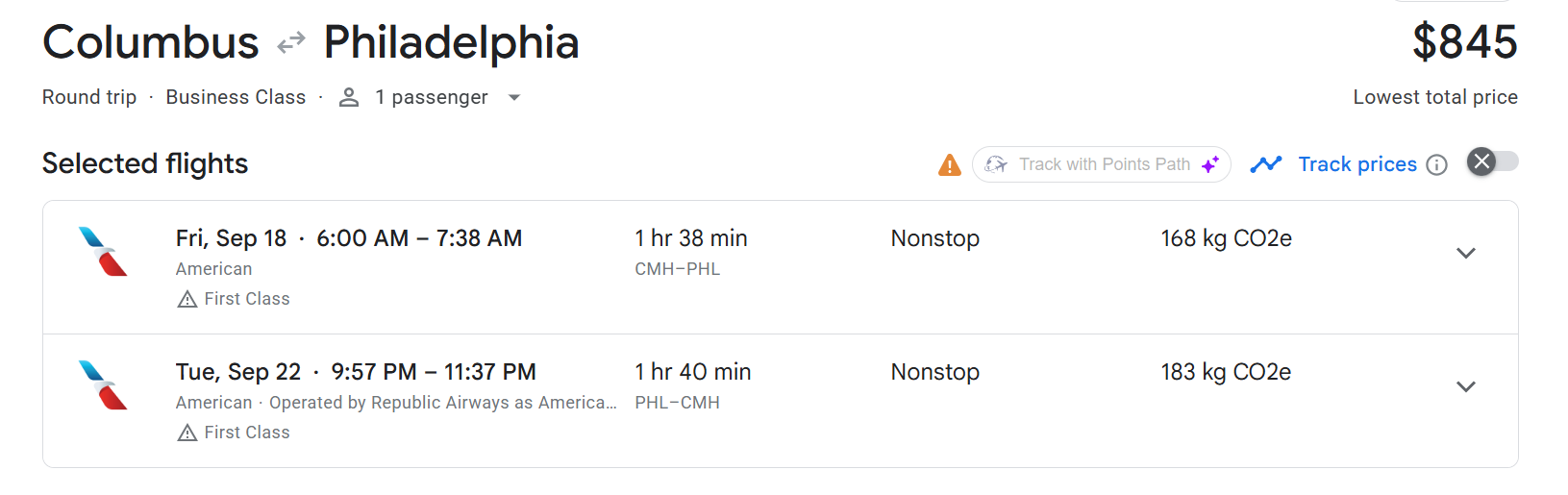
Start With the Cash Price
Before I think about points, I want to know what the trip actually costs.
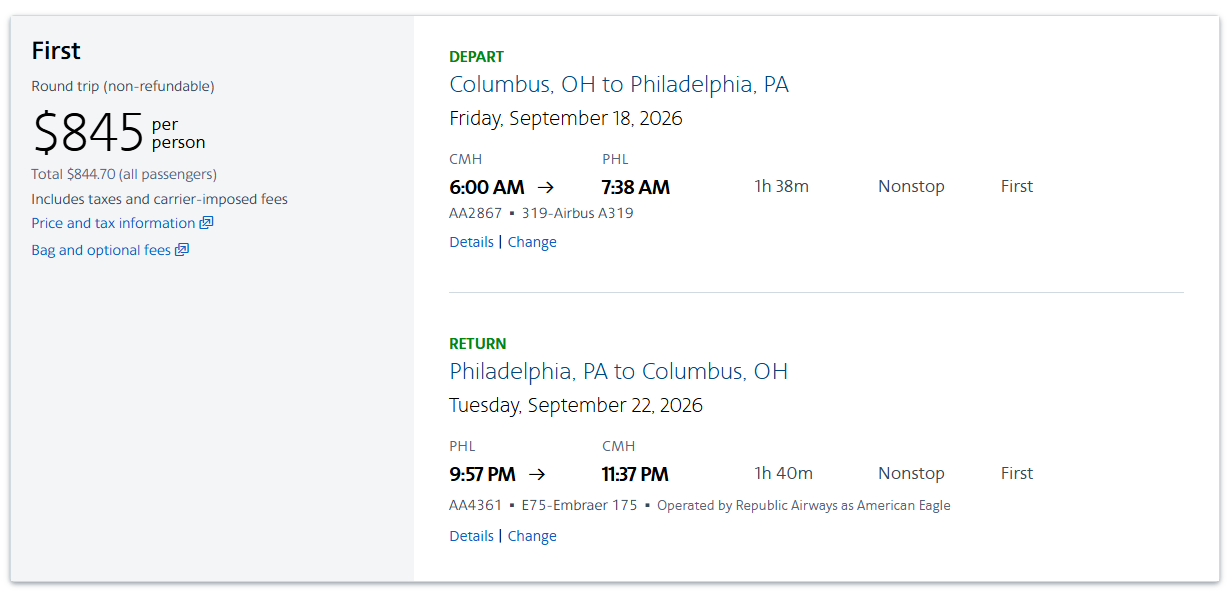
Google Flights showed the itinerary at about $845 round trip, and American showed the exact fare at $844.70.
That is my baseline.
Without the cash price, knowing that a flight costs 18,000 points, 29,000 miles or 84,000 points does not tell me nearly enough.
I want to know what those points are actually replacing.
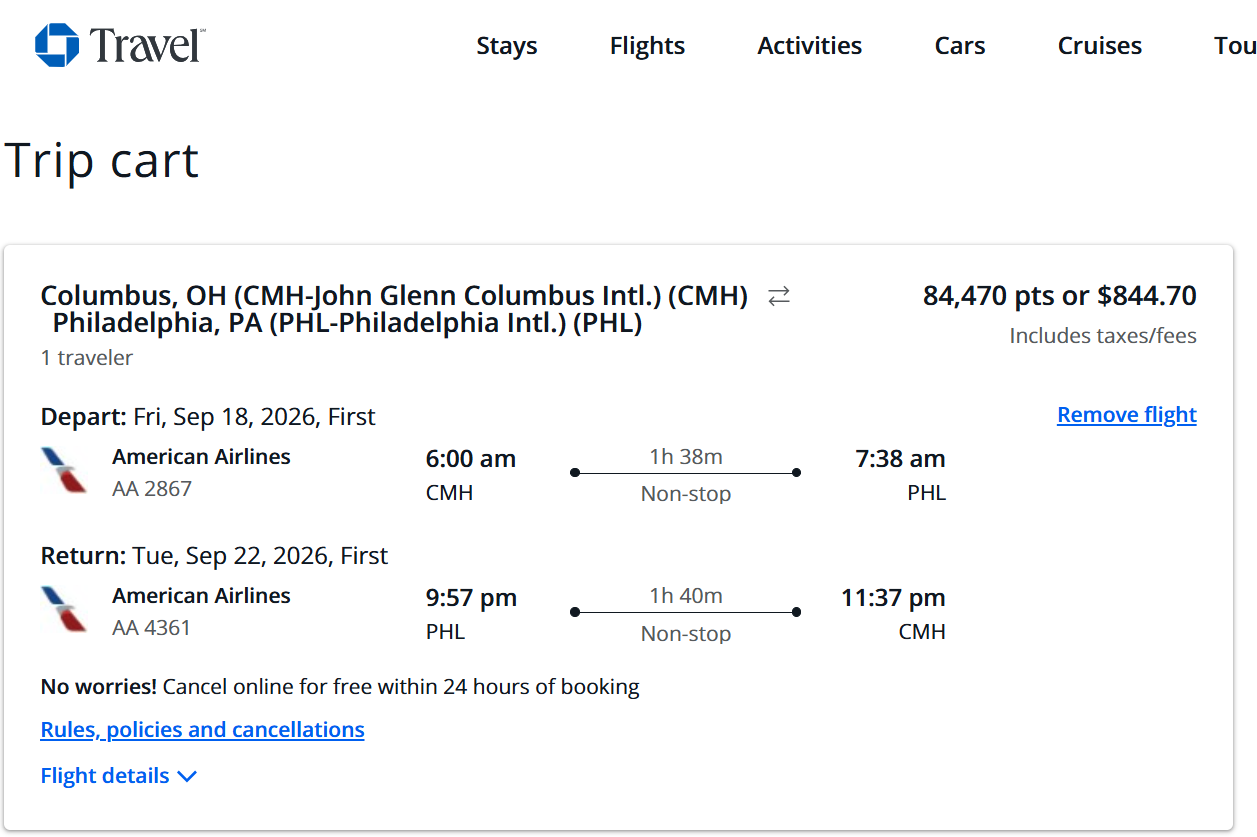
The Easy Option: Use a Credit-Card Travel Portal
The Chase Travel portal showed the same $844.70 fare for 84,470 Ultimate Rewards points.
Amex Travel showed the itinerary at a slightly higher $885.80 cash price, or 88,580 Membership Rewards points.
In these particular searches, both portals were giving me 1 cent of airfare for each point redeemed.
There is nothing inherently wrong with that.
Portals are convenient. Sometimes there is no good award availability. Sometimes simplicity matters. And a card-specific portal benefit could change the math.
But I would not assume the portal is the best use of my points simply because it is the easiest place to redeem them.
If I had stopped there, I could have used more than 84,000 points for this flight.
So I kept looking.
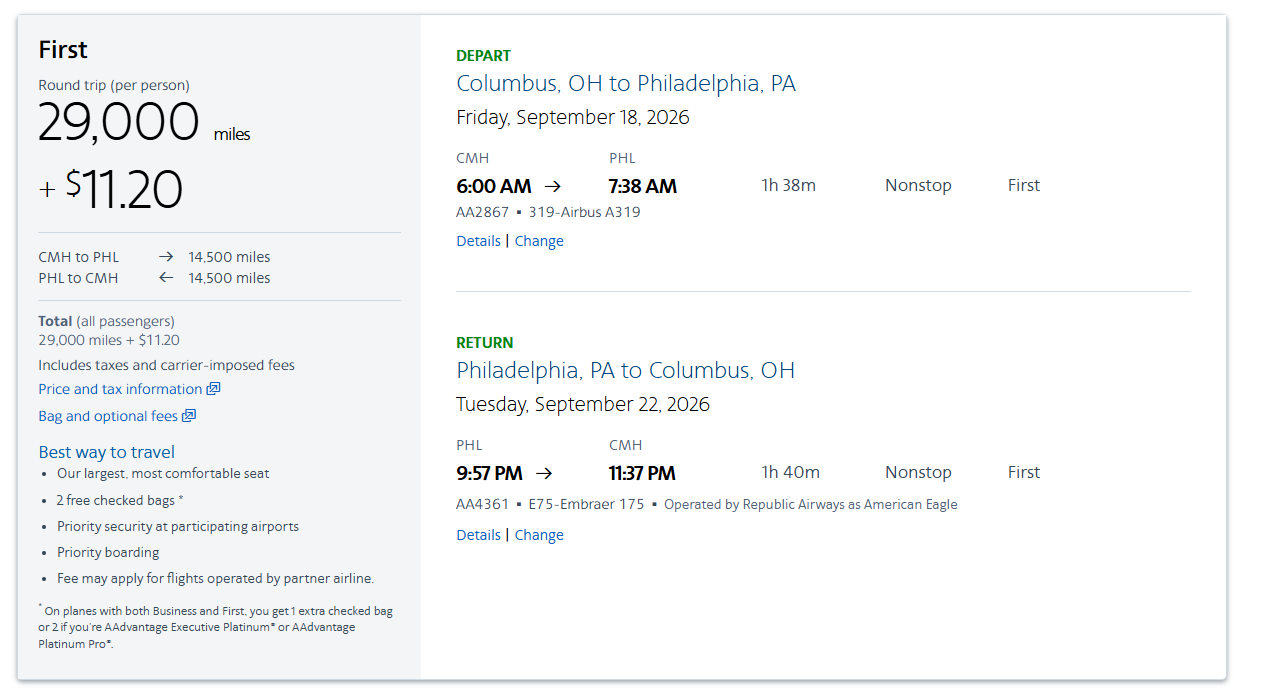
Booking Directly With American Miles Was Already a Good Option
American offered the exact same roundtrip first-class itinerary for:
29,000 AAdvantage miles + $11.20
That was already a dramatically different result from the portals.
And this is a good place to show how I calculate the value of an award.
A Quick Points-Value Example
Start with the cash fare:
$844.70
Subtract the taxes and fees I still have to pay:
$844.70 - $11.20 = $833.50
Then divide the value the miles are covering by the number of miles used:
$833.50 ÷ 29,000 = $0.0287
Move the decimal two places to express that in cents:
2.87 cents per AAdvantage mile
That is a very good redemption for this trip.
The formula is simply:
(Cash price - award taxes and fees) ÷ points or miles used = value per point
I always check the value I am getting from a points redemption. Cents per point is not the only thing that matters, but it is a useful benchmark when you are comparing options and deciding whether a redemption actually makes sense.
Then I Checked an Airline Partner
This is where the trip got more interesting.
I was flying American Airlines, but that did not necessarily mean I needed to book with American miles.
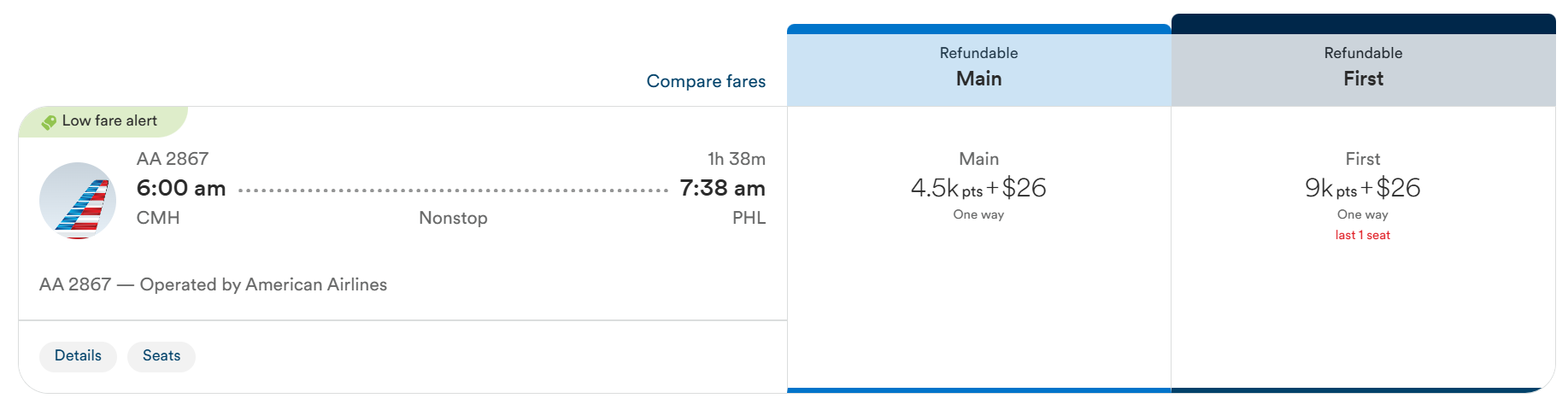
American and Alaska are airline partners, and Atmos Rewards points can currently be redeemed for eligible American Airlines flights.
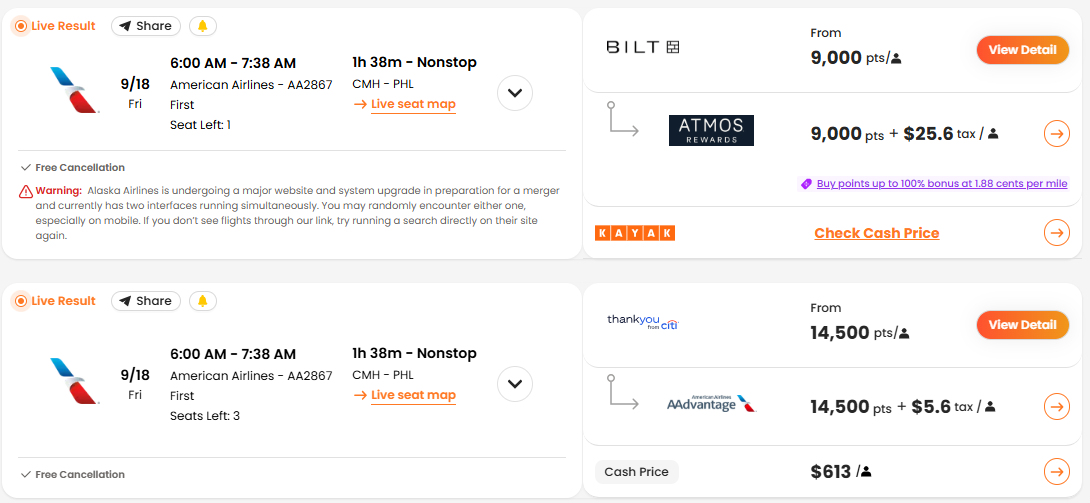
When I searched the same flights through Atmos, each direction was available for:
9,000 Atmos points + $25.60
Round trip:
18,000 Atmos points + $51.20
Same American flights. Same first-class seats.
29,000 AAdvantage miles versus 18,000 Atmos points.
Using the same formula, the Atmos redemption worked out to approximately:
4.41 cents per Atmos point
Compared with:
2.87 cents per American mile
For me, Atmos was the clear choice for this trip.
Fewer Points Isn't the Whole Decision
It would be easy to stop here and say, “18,000 is better than 29,000.”
But that is not how I look at it.
The Atmos option also required about $40 more in taxes and fees than the AAdvantage option.
I was comfortable with that tradeoff.
More importantly, I was getting substantially more value from each Atmos point.
And there is another question that matters just as much:
What points do you actually have access to?
A fantastic award in a program you cannot access is not especially useful.
Someone with a large AAdvantage balance and very few Atmos points could reasonably make a different choice than I did.
Today, Atmos points can be earned through its shopping and everyday partner ecosystem, co-branded cards, and other methods. Bilt currently transfers to Atmos at 1:1.
That is why I think of points as different currencies rather than one giant bucket.
The best redemption depends on the value, the cash required, the currencies you have, how easily you can replace them, and what else you might want to use them for.
And American Isn't the Only Airline With Partners
Atmos is the example that worked for this trip, but Atmos is not really the larger lesson.
Airline partners are.
American participates in the oneworld alliance, and partner programs can sometimes provide additional ways to book American-operated flights. My Summit Navigator Transfer Partner Strategy Guide includes programs such as British Airways and Qatar Airways among the options worth understanding when looking at American and other oneworld flights.
That does not mean every partner will see every flight.
It does not mean the partner will always charge fewer points.
It simply means you may have more than one door into the same airplane seat.
That is why I check.
What If You Don't Have the Points? Check What It Would Cost to Buy Them
Not having the points already does not necessarily mean an award booking is off the table.
If I were planning to pay cash for a flight anyway, I would also check what it would cost to buy the points needed for the award. It takes a couple of extra steps, but sometimes the difference can be significant.
This trip is a perfect example.
American was selling this first-class ticket for $844.70. But because I had already found the same flight for 18,000 Atmos points + $51.20, I could work backward and ask a different question:
What would it cost me to acquire those 18,000 points instead of paying $844.70 for the ticket?
When I checked Atmos, I had an offer to buy 20,000 points with a 90% bonus.
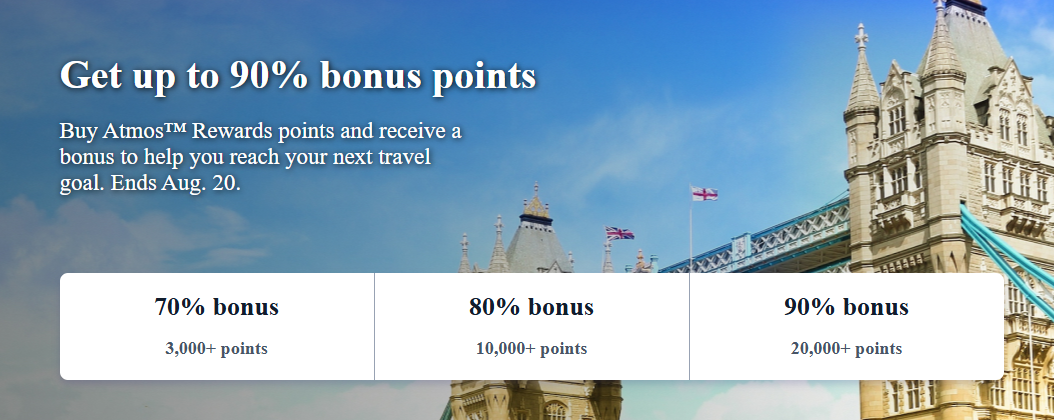
That meant:
20,000 purchased points
+ 18,000 bonus points
= 38,000 Atmos points
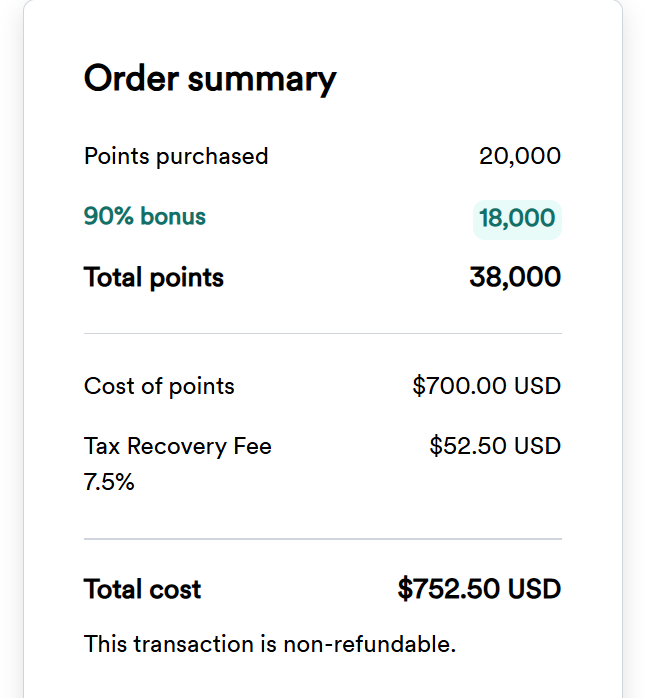
The initial point price was $700, but the checkout screen also showed a $52.50 tax recovery fee, bringing the actual total to:
$752.50
That works out to about 1.98 cents per point.
Now apply that cost to the award I had already found.
Eighteen thousand points acquired at that price represent about $356.45 of the points purchase.
Add the $51.20 in award taxes:
Effective cost of one ticket: about $407.65
American was selling the same ticket for $844.70.
On an effective-cost basis, that is less than half of the cash fare.
There is an important distinction, though. Under this particular promotion I would need to purchase 38,000 total points for $752.50, not just the 18,000 needed for one ticket. After booking one award, I would still have 20,000 Atmos points left.
So if I were already considering paying cash for this flight, I would absolutely check what it would cost to acquire the points instead. The comparison becomes even more interesting when you look at two tickets.
The 38,000-point purchase would be enough for two of these 18,000-point roundtrip tickets, with 2,000 points left.
The full out-of-pocket cost would be:
$752.50 for the points + $102.40 in award taxes = $854.90
American's cash price for two tickets would have been:
$1,689.40
So for just $10.20 more than American was charging for one cash ticket, that points purchase could provide enough points for two of these awards, assuming the same award availability was still there.
And I would still have 2,000 Atmos points left.
That is a pretty compelling reason to check the cost of buying points before automatically paying the cash fare.
But There Is an Important Catch
I would not buy airline points just because a big percentage bonus pops up on the screen.
The points purchase shown above was also non-refundable.
I would do it in this order:
Find the award. Verify that it is actually bookable. Calculate the full cost. Then decide whether buying the points makes sense.
Not the other way around.
The promotion, award availability, and pricing can all change.
This example is useful because the math happened to work extremely well for a specific flight I had already found.
How I Search Without Checking Every Airline Website
You do not need expensive software or hours of free time to start looking beyond a portal.
I begin with Google Flights so I know the schedule and cash price.
I also like Points Path, whose basic version is currently free and adds points information directly into Google Flights searches through a browser extension.
Then I use PointsYeah for broader award visibility. PointsYeah currently offers free live award searching, which is exactly how comparisons like AA versus Atmos become easier to see.
Search tools help me discover possibilities.
Before transferring, buying or committing points, I still verify the award directly with the loyalty program.
That extra check matters.
What I Actually Booked
For this trip, I booked the American first-class itinerary through Atmos Rewards.
For me, it made sense because the award was available, I already had access to Atmos points, the redemption value was excellent, and I was comfortable with the slightly higher taxes.
Another traveler could look at the same options and reasonably choose American miles instead.
That is okay.
The goal is not to find one universally perfect points currency.
It is to understand enough of your options to make the best decision for your trip and the points you actually have.
And there is one more perk I’m looking forward to on this trip: hopefully spending a little time in the Chase Sapphire Lounge in Philadelphia before our flight home.
We actually have two different card-based ways to access the lounge, which may be another Travel Tuesday topic for another day.
Before You Redeem 80,000 Points, Take a Few More Minutes
The biggest lesson from this first Travel Tuesday is not “go get Atmos points.”
It is that the 84,470-point portal redemption was only one possible answer.
The same American first-class itinerary could be booked for:
84,470 Chase points
88,580 Amex points
29,000 American miles + $11.20
18,000 Atmos points + $51.20
And depending on the points sale available, even buying the points could produce a completely different result from simply buying the airfare.
Before using a large number of points, I would compare:
the cash fare → the portal → the airline's own program → airline partners → how you can access the points → total value
You do not need to chase every possible redemption.
You just want to know whether the first option you see is actually the one that makes the most sense.
Want to See Which Programs Partner With Your Favorite Airlines?
Knowing that airline partners exist is one thing.
Remembering which credit-card programs connect with which airlines and which programs may give you another way to book is much harder.
That is why I created the Summit Navigator Transfer Partner Strategy Guide. It is designed as a quick reference for major transfer programs, airline alliances, and partner possibilities, with the reminder to confirm award availability before moving points.